


In November 2025, the global urea market ended its previous weak and volatile trend, showing a stabilizing trend driven by both policy support and demand. Multiple positive factors, including increased export quotas in China and a widening bidding gap in India, combined to push international prices to stop falling and rebound. However, the global supply-demand imbalance remained unchanged, and regional market differentiation remained a key focus for companies.
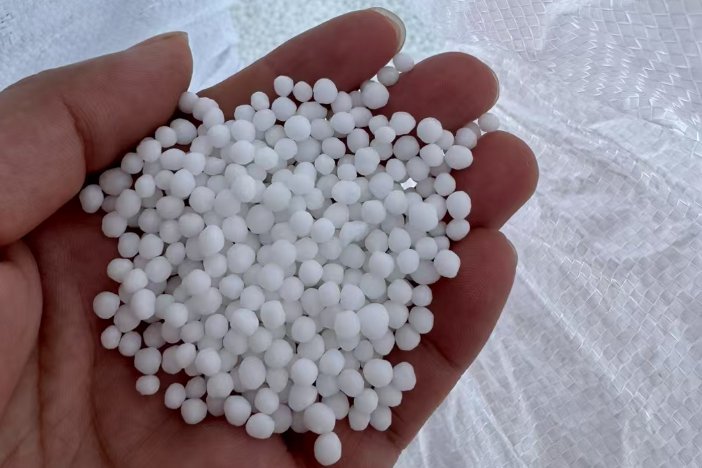
Regarding prices, by mid-to-late November, international urea prices had ended their previous downward trend. The FOB price of small-particle urea in China remained stable at $395-405/ton, while the price of high-end large-particle urea increased by $10 to $415/ton, demonstrating continued export competitiveness. Regional differentiation is evident: the Indian market performed strongly, with CFR landed prices surging $18-23 to $418-420 per ton, becoming the core driver of the Asian market; prices in major supply regions such as the Middle East and the Black Sea saw slight easing, with the lower end of the Middle East FOB price decreasing by $5 to $405 per ton, reflecting the overall loose global supply fundamentals.
Click to jump to Urea: UREA
On the export policy front, China continues to exert its control measures. As of November, China had issued four rounds of export quotas totaling nearly 5 million tons. The fourth batch of 600,000 tons of quotas and previously unused quotas are expected to keep monthly exports at a high level of 500,000-700,000 tons. Customs data shows that from January to October, China's cumulative urea exports reached 4.0148 million tons, a surge of 1459.82% year-on-year, with the continued open export window injecting momentum into global trade. The policy direction is clear, prioritizing the demand of "Belt and Road" partner countries.
The supply and demand pattern exhibits characteristics of "high supply, weak rigid demand, and strong policy." Global new production capacity reached 8.21 million tons, bringing China's total capacity to over 85 million tons. Domestic daily output remained high at 198,000 tons, while inventory once climbed to 1.48 million tons. On the demand side, agricultural demand increased by only 3%-4%, but a bidding gap in India (October bidding completion rate less than 22%) and the start of domestic winter stockpiling provided support, leading to a steady increase in compound fertilizer companies' procurement.
Looking ahead, industry insiders expect China's exports in November and December to be higher than previously anticipated, but limited quotas and the international off-season will continue to limit price increases. Foreign trade companies need to closely monitor policy developments, focus on high-demand regions and high-end product markets, and guard against risks from geopolitical tensions and natural gas price fluctuations.