



Part One: Is higher organic matter content always better for organic fertilizer?
The answer is: Not necessarily. High organic matter content is an important indicator, but it's not the only one, and certainly not the absolute standard for judging quality.
High-quality organic fertilizer needs to consider multiple indicators, including organic matter quality, decomposition degree, and nutrient balance. Blindly pursuing high organic matter content may be counterproductive. Organic matter is like the "staple food" for the soil; its main functions are improving soil structure (loosening the soil, retaining water and fertilizer) and providing a carbon source. But a meal is unbalanced if it only has staple food without "vegetables" (various nutrients) and "beneficial bacteria" (microorganisms).
If a product claims to contain over 60% organic matter, be wary of two potential problems: First, the addition of uncomposted straw, sawdust, or other inert organic matter. These substances compete with crops for nitrogen in the soil and may even cause root burn due to secondary fermentation. Second, the mixing of natural organic matter such as peat and humus. While these may have a high content, they decompose slowly, resulting in a mismatch between nutrient release and crop needs, making them less effective than qualified products with moderate organic matter content. What's truly effective is "active organic matter," the portion that can be decomposed by microorganisms and absorbed by crops, not simply the total amount.
Part Two: How to Quickly Determine the Quality of Organic Fertilizer?
In the absence of professional testing, we can quickly make a preliminary judgment by "looking, touching, soaking, and smelling".
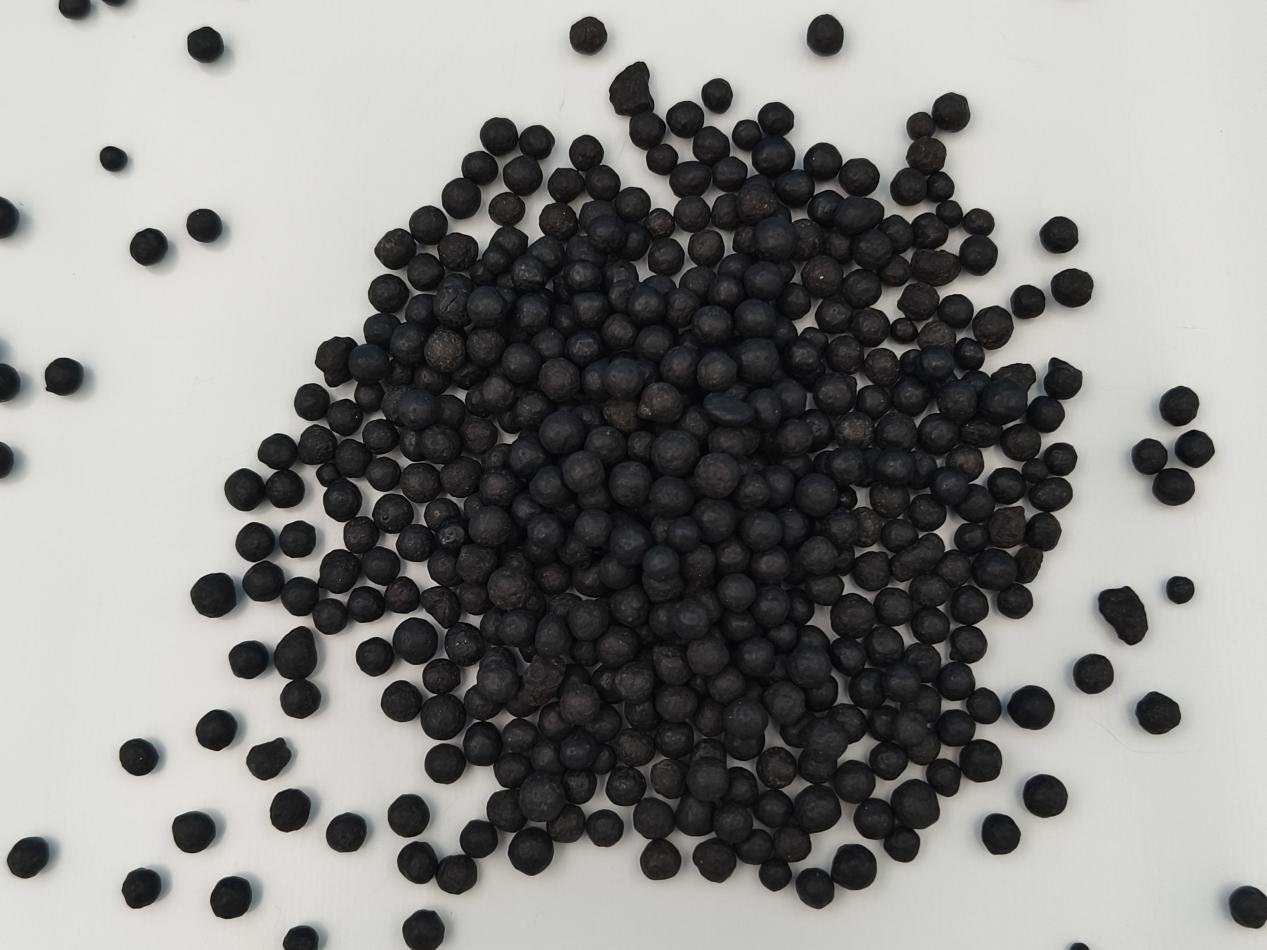
Look at the appearance: High-quality organic fertilizer is usually dark brown or blackish-brown. If the color is very light, like yellow soil, it indicates insufficient organic matter content. If the color is uneven and contains undecomposed impurities, the quality is poor.
Feel the texture: Grab a handful of organic fertilizer and squeeze it tightly. If it's moist but not sticky, and spreads out naturally after releasing it, the moisture content is suitable (generally 20%-30%). If it clumps severely, is sticky, and difficult to disperse, it may have excessive moisture or be mixed with clay. If it feels too dry and dusty, it may have insufficient organic matter content or added inert fillers.
Observe the bubbles: After stirring, if a large number of bubbles continue to rise, it indicates that it is not fully decomposed. After being applied to the soil, it will continue to ferment at the root zone, producing high temperatures and harmful gases, causing "root burn." A simple test: Take a small amount of organic fertilizer and put it in clean water, stir, and let it stand for 10 minutes. High-quality fertilizer will dissolve slowly, and the water will be a cloudy, tea-brown color, without layering or floating debris. If obvious layering occurs (straw floating on top, sediment settling at the bottom), or the water is clear and not cloudy, it is likely inferior fertilizer.
Smell the odor: High-quality fertilizer has a strong earthy smell or a mellow, fermented aroma that is pleasant to the senses. Inferior or uncomposted fertilizers have a pungent sour, foul, or ammonia-like smell. When applied to the soil, they can easily produce harmful gases such as hydrogen sulfide, which can burn the roots.