



Since March, the global fertilizer market has experienced significant volatility triggered by geopolitical conflicts. With the approaching spring planting season in the Northern Hemisphere and the continued tension in the Middle East, the fertilizer market has shown a divergent pattern: "stable with slight increases domestically, and significant increases internationally."
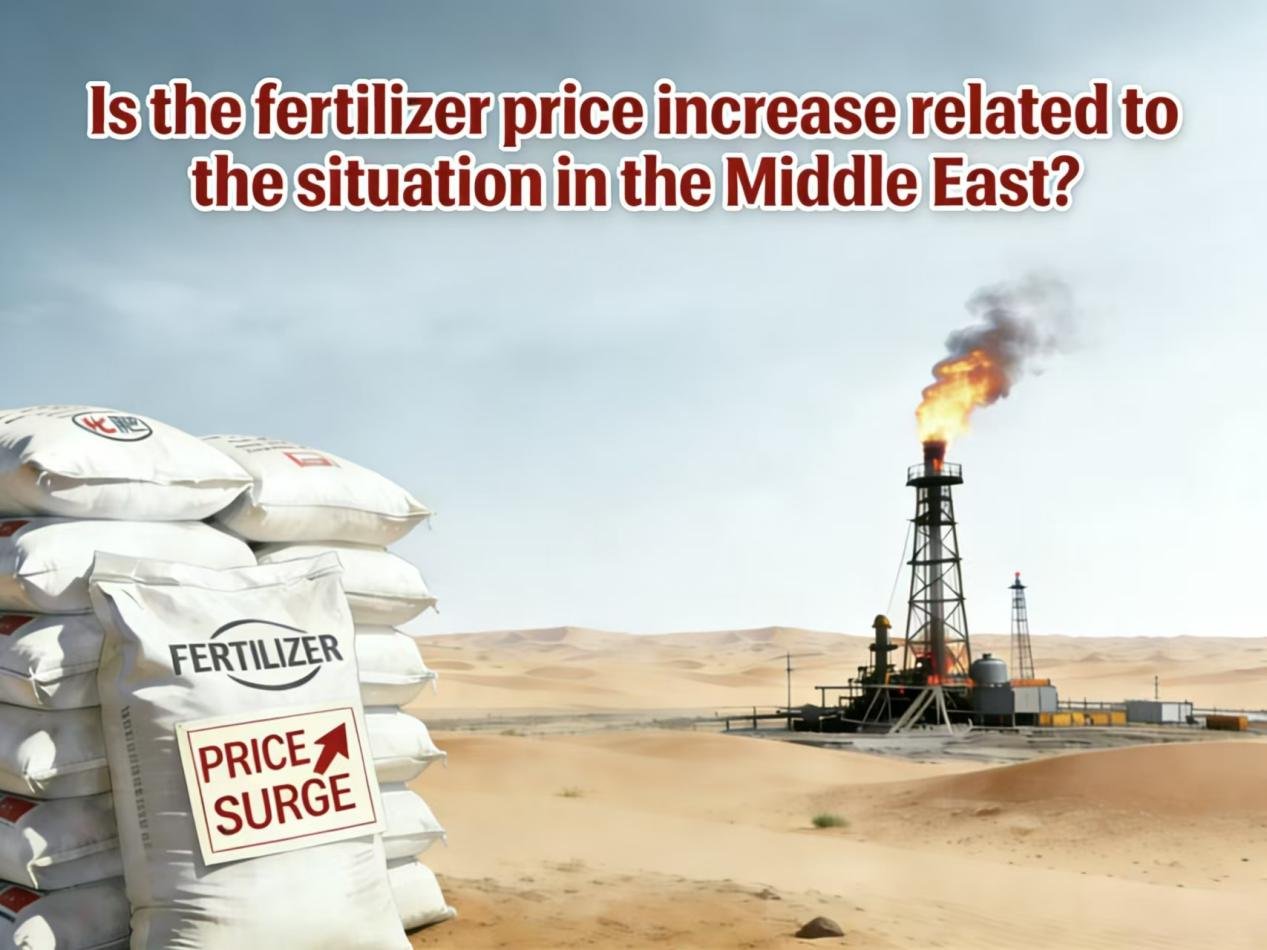
Domestic Market: Prices Remain High Amid Spring Planting Supply Guarantee
In the domestic market, the overall trend is "phosphate fertilizer leading the price increase, urea fluctuating, and potash fertilizer showing divergence," with cost support and essential spring planting demand being the core drivers. Urea inventory reduction is accelerating, and price fluctuations are controllable due to national reserve releases, without a significant surge. Phosphate fertilizer has become the main driver of price increases. Affected by the obstruction of sulfur imports from the Middle East, port sulfur prices have exceeded 4,500 yuan/ton, reaching a three-year high, pushing monoammonium phosphate (MAP) up by over 15% monthly. Some companies have stopped quoting prices to control supply, resulting in tight spot supply. The potash fertilizer market is clearly differentiated. Potassium chloride prices are stable due to locked-in import long-term contracts, while potassium sulfate prices are affected by rising raw material prices and low operating rates.
On the export policy front, on March 14th, the General Administration of Customs issued an emergency notice, completely suspending all export declarations for phosphate fertilizers and phosphate-containing fertilizers, covering all categories including monoammonium phosphate, diammonium phosphate, and superphosphate. Declarations without supporting documentation will not be issued. Coupled with the cancellation of export tax rebates and stricter controls on legal inspections and licenses, the phosphate fertilizer export channel is essentially closed. The core of this policy adjustment is to ensure domestic fertilizer demand for spring planting and curb resource outflows caused by excessive international price differences. The policy will remain in effect until August 2026, with the specific resumption time depending on domestic supply and demand and policy adjustments.
International Situation: Geopolitical Conflicts Trigger Price Hikes
In the international market, the ongoing geopolitical conflict in the Middle East has become the core trigger for soaring prices. As a core fertilizer-producing region globally, the Middle East contributes 35% of the world's urea and 28% of its ammonia supply. The war has led to a sharp decline of nearly 40% in its exports, a 70%-80% decrease in shipping traffic in the Strait of Hormuz, and an 87% increase in shipping costs compared to before the war. By mid-March, the FOB price of Middle Eastern urea reached $597-650/ton, a 40% increase compared to the end of last year. The main urea contract on the Chicago Mercantile Exchange was at $584.5/ton, a 25% increase compared to before the escalation of the conflict. Affected by the suspension of Chinese phosphate fertilizer exports, the global phosphate fertilizer supply has further tightened, with international FOB phosphate fertilizer prices exceeding $700/ton, 20%-30% higher than domestic prices. Prices may continue to rise.
Market Outlook: In the short term, the situation in the Middle East remains unclear, and the international fertilizer market will maintain a high level of fluctuation. Domestically, ensuring supply and stabilizing prices during the spring planting season remains the top priority, limiting the potential for significant price increases. However, due to the price comparison effect in the international market and cost support, a slightly bullish fluctuation pattern, "easier to rise than fall," is expected.